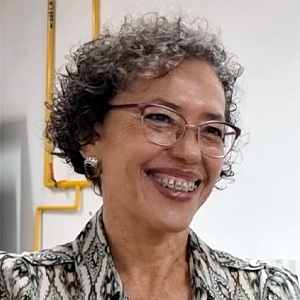
YBETTE NOGUEZ
Academic Coordinator
Olinca Educational Institute
Mexico City
I knew from the start that I wanted to transform the way we taught science at Olinca Educational Institute. That’s why, four years ago, we made a crucial decision: to move away from the traditional textbook and adopt a more dynamic, hands-on approach connected to the real-world experiences of our middle school students.
It all began in 2019, at a time when we were already actively exploring educational innovation and the integration of digital materials and devices into the classroom. However, finding a resource that truly met our needs was a challenge. Many options were limited to simulations or digitized textbooks without any real methodological change. Nothing aligned with the vision we had.
Then we discovered Science Bits. From the very first demonstration, I saw that the project brought together exactly what we were looking for: a rigorous approach based on the scientific method, meaningful learning, and digital resources designed to develop genuine scientific competencies.
We started by implementing it in Physics and Chemistry. A year later, we added Biology, and today we teach Natural Sciences from sixth grade onward, creating a progressive and coherent model throughout the program. We’ve even started making the transition to mathematics with Math Bits.
Implementation had its challenges, especially because not all teachers adapted at the same pace. The turning point came when we all understood that the goal was not simply to use a tool, but to change the way we teach science.
Today, the impact in the classroom is clear. Our students not only understand the content better, but also develop key skills such as critical thinking, problem-solving, and the ability to apply what they learn in different contexts.
One of the most challenging periods was during the pandemic. Families inevitably asked: How would we conduct laboratory activities remotely? The answer was Science Bits’ interactive simulations. These aren’t basic simulations; they are complete experiences in which students can experiment, make decisions, record data, and understand processes, allowing us to maintain the quality of instruction even when teaching remotely.
Over time, we also noticed a significant improvement in academic performance. Our students take the CENEVAL exam in January, before they have completed the entire curriculum, yet their results remain very positive. For me, the key is their familiarity with the kind of thinking required by the assessment, thanks to this approach based on scientific competencies.
Science Bits has also changed the way we work in the classroom. In the past, we solved exercises in the traditional way on the blackboard. Now, we encourage collaborative work: students work in teams on different problems, requiring them to focus on the process, the methodology, and how to arrive at a solution rather than simply looking for the correct answer.
They learn to think.